
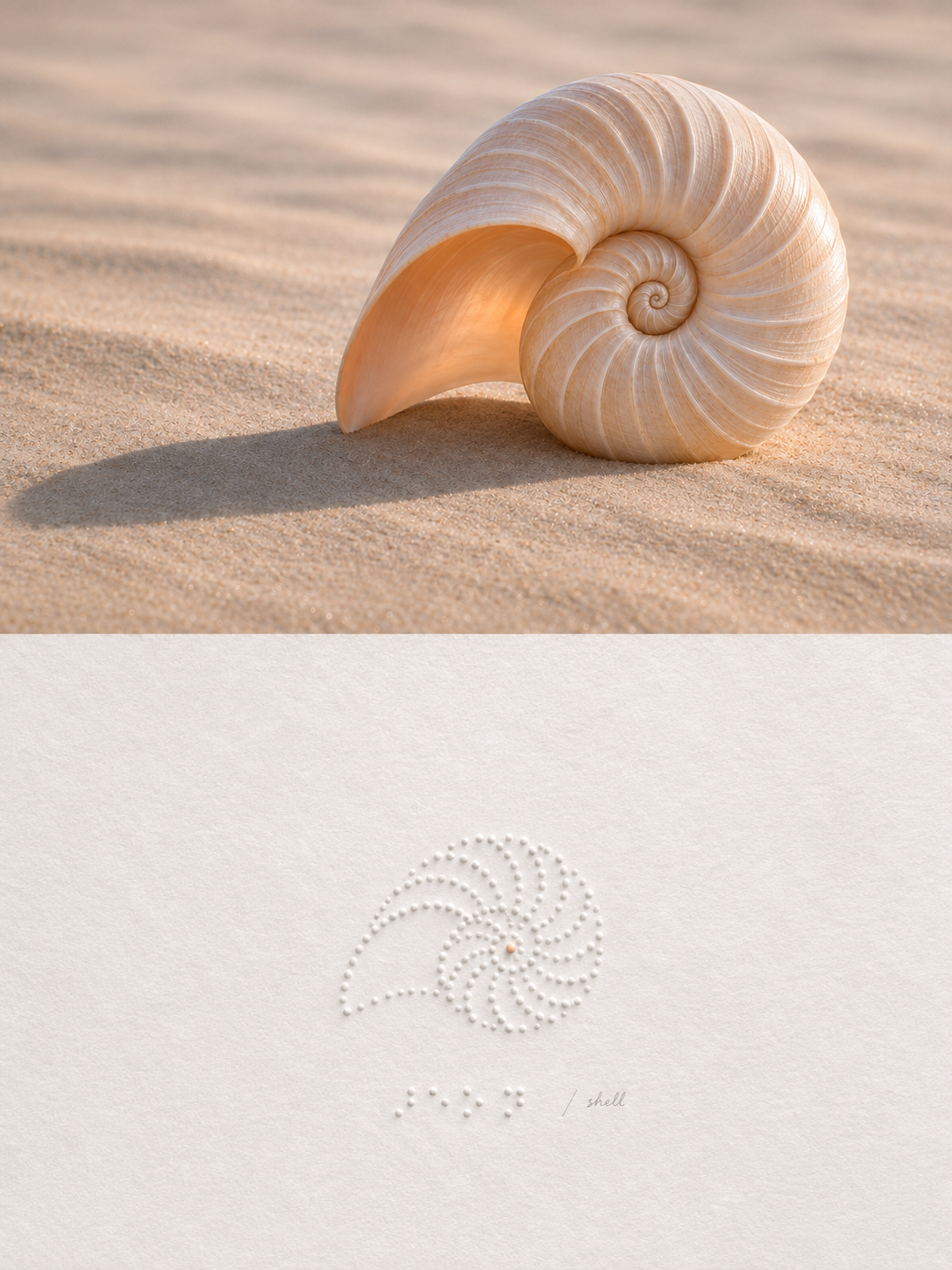
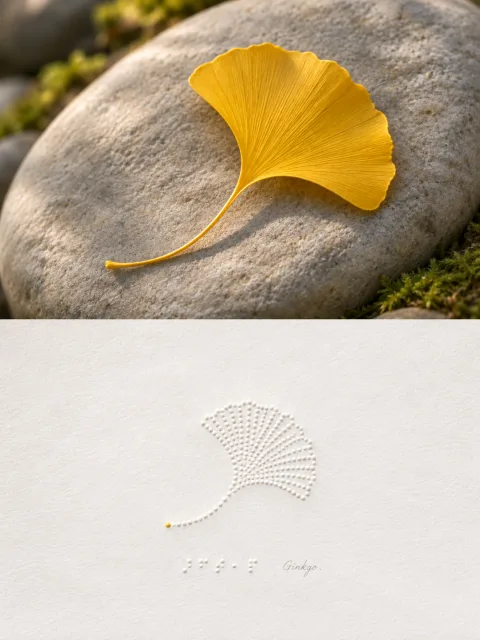
A Poster That Turns a Photograph into a Raised-Dot Relief on White Paper
Prompt
Turn each photo I upload into a separate, high-end design poster. Do not combine multiple photos into one image; output each photo separately. Use an overall vertical 3:4 composition, with the top and bottom sections exactly equal in height, each occupying 50% of the image.

Preserve the original photo in the top half, retaining the subject’s identity, structure, pose, realistic texture, natural lighting and shadows, and original color mood. Apply only subtle, refined color grading to give it the feel of art photography and an independent publication. To fit the aspect ratio, you may naturally extend the background, but do not stretch, distort, or alter the subject.

In the bottom half, extract only the photo’s most recognizable **subject contours and structural features**, and distill them into a single **inkless relief symbol made of raised dots / blind embossed dot symbol**: all shapes are made of small raised dots of uniform size and regular spacing, like a Braille dot matrix used to draw a picture. Keep the outline highly simplified, making the subject recognizable at a glance in side lighting through the arrangement and density of the dots.

The core of this artwork is **the near-total absence of color**: the entire bottom half is a sheet of thick white cotton paper, with the pattern formed only by raised dots pressed into the paper, visible only when low-angle side lighting casts tiny shadows. It is a quiet visual that takes a closer look to understand.

Emphasize the realistic, inkless embossing: the fibers and softness of thick cotton or watercolor paper; the soft highlights and short shadows along the edges of each raised dot; and the subtle undulations pressed into the paper. Avoid digital embossing filters, the plasticky look of 3D rendering, and excessively sharp shadows.

Center the composition on **a small raised-dot symbol + a very large amount of negative space**. The symbol should occupy only about 15%–20% of the bottom half. It may be centered or placed slightly lower, like a quiet mark, surrounded entirely by pristine white paper.

Keep the palette almost entirely white. Allow only one color with the greatest emotional resonance, taken from the photo above, to appear in a very small amount: for example, lightly color one raised dot, or add an extremely fine line of color in a corner of the paper. Its area must not exceed 1%.

Emboss a short word below the symbol in the form of Braille raised dots, and optionally write its meaning beside it in extremely small pencil lettering, like a note intended only for those willing to come closer. The language is unrestricted.

Create an overall tactile visual composed of **inkless embossing, Braille dot matrices, side-lit shadows, an almost entirely white palette, and a very large amount of negative space**. The core principle is: some memories are not seen; they are touched. Avoid digital embossing filters, colorful patterns, full-page dot matrices, 3D rendering, a cartoonish look, and templated logos.
Input images
Summary
Attach a photo, and this creates a poster that depicts the subject’s contours with tiny raised dots in white paper. The top half shows the original photo; the bottom half is an inkless relief with generous negative space. The texture of the paper and light from the side create a quiet design that makes you want to reach out and touch it.