Minimalist Poster Transforming a Photo into Bright Paper Sculpture
Prompt
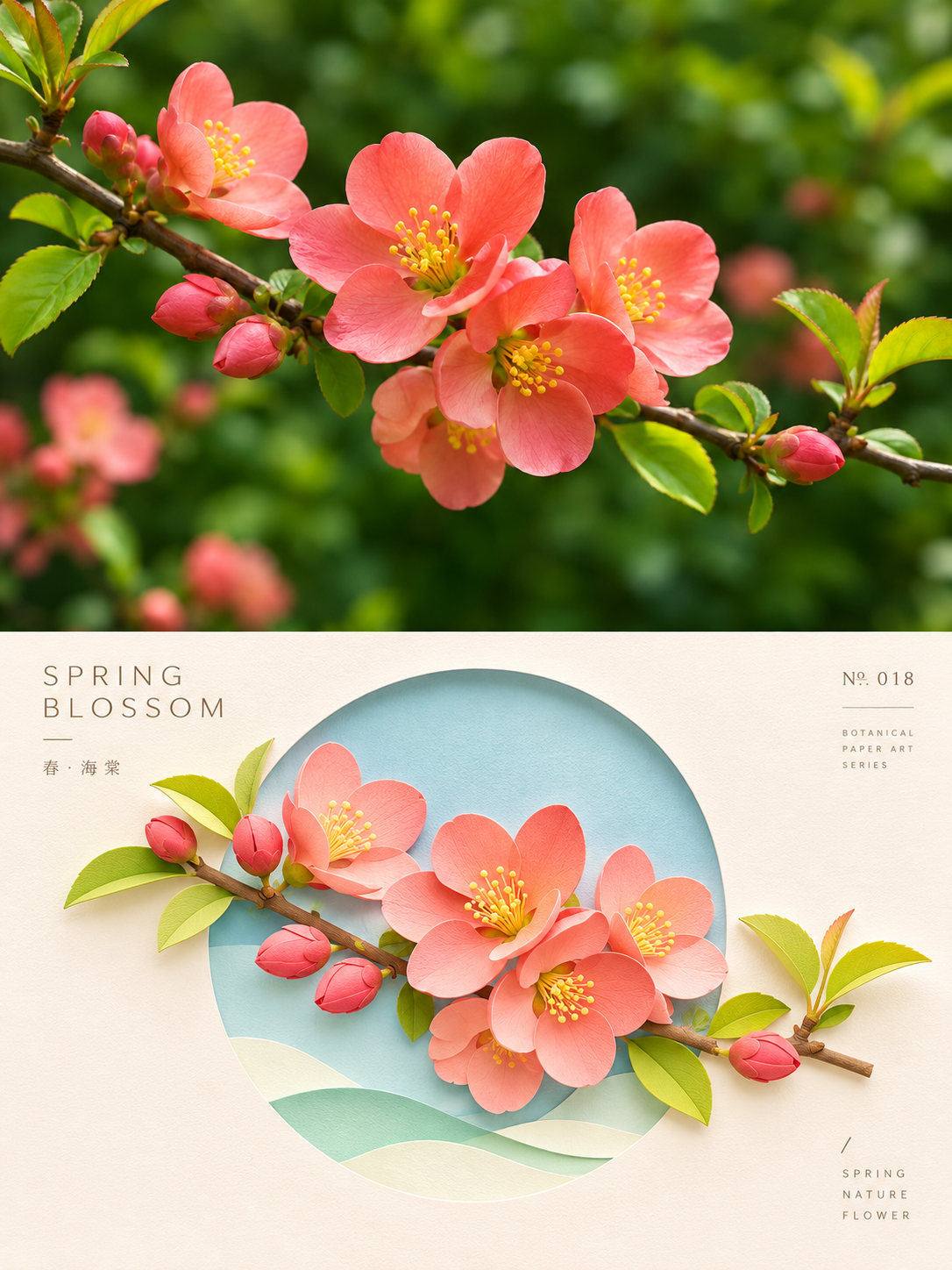
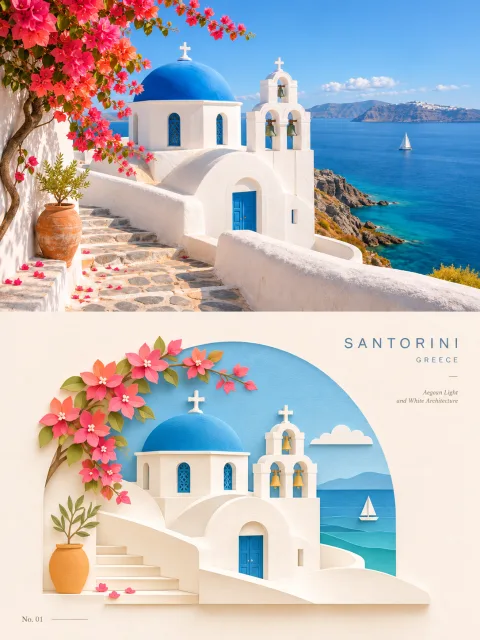
Create a separate, premium minimalist design poster for each photo I upload. Do not combine multiple photos into a collage; output each photo individually. Use an overall 3:4 portrait composition, with the heights of the upper and lower sections kept strictly at a 1:1 ratio, each occupying 50% of the image. Preserve the original photo in the upper section, maintaining the subject's structure, realistic texture, natural lighting and shadows, and original color atmosphere. Apply only subtle, refined color grading to give it the feel of fine-art photography and exhibition imagery. To fit the frame, you may naturally extend the environmental background, but do not stretch, distort, or alter the subject. In the lower section, extract the subject's most recognizable contours, structure, spatial relationships, and narrative features from the photo, and reconstruct them as a miniature paper-sculpture scene in the style of layered paper cut art / 3D papercraft diorama / architectural relief. Do not reproduce the details of the photo; retain only its most essential visual symbols and re-express them using multiple layers of paper, cutout silhouettes, openwork structures, and spatial layering, so the subject looks like a paper-art installation in a modern design exhibition. Build a sense of dimensionality with simple structures, precise edges, multiple cut planes, and subtle spatial shadows. Do not aim for realistic 3D rendering; instead, convey a light, airy quality that combines paper, architectural models, and art installations. Keep the subject as a single visual focal point, with generous negative space and a restrained, balanced composition. Draw colors from the brightest, most vivid, most lively colors in the upper photo and reinterpret them, rather than sampling colors uniformly. Increase the overall brightness and color purity, using bright hues naturally derived from the original image, such as clear sky blue, lake aqua, fresh green, warm yellow, coral orange, and peach pink. Use ivory white and warm beige as the primary spatial background, creating a soothing effect through fresh warm-cool contrasts. Keep the main colors vivid but not glaring, with touches of warm orange, golden yellow, or pink as accents. Avoid dingy gray, aged or somber muted tones, dark brown filters, fluorescent colors, and a cheap candy-like feel. Introduce only a small amount of text; freely generate a short title, number, or tiny annotation based on the subject, location, mood, or cultural significance. Use refined, restrained modern typography with an architectural editorial feel, like information labels in an art exhibition or a premium brand identity, and integrate it naturally into the negative space. Overall, take inspiration from international design studios, architectural posters, art exhibition visuals, and premium brand identity systems, conveying paper-sculpted space, modern Eastern aesthetics, clear colors, generous negative space, and a refined sense of craftsmanship. Avoid realistic CGI, a plastic texture, a children's craft feel, complex backgrounds, and template-like effects.
Input images
Summary
Attach a photo to create a poster with the original photo in the upper half and a three-dimensional artwork made of layered paper in the lower half. It can retain the distinctive features of flowers or buildings while expressing them lightly through bright colors and the shadows of the paper.