
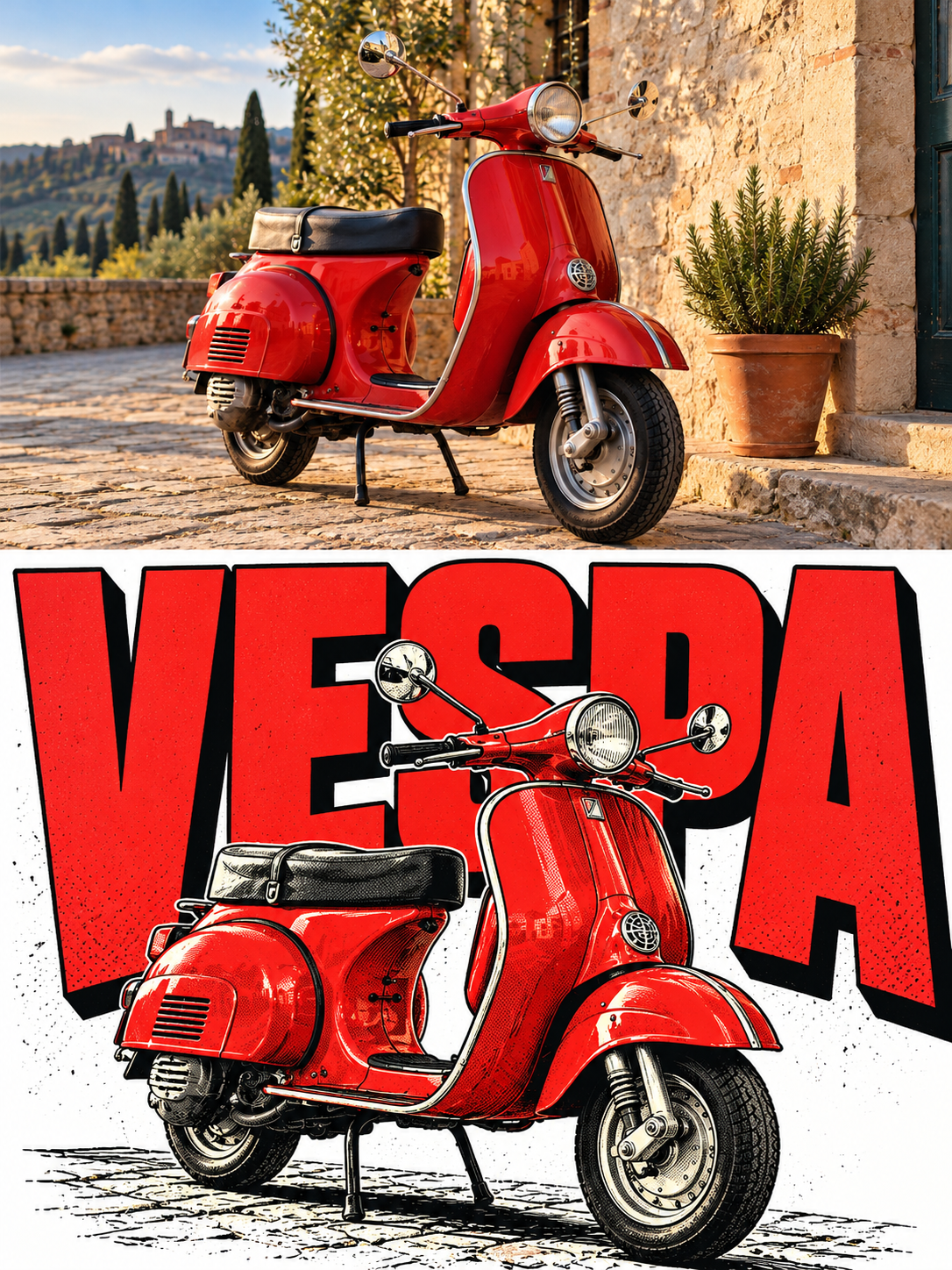
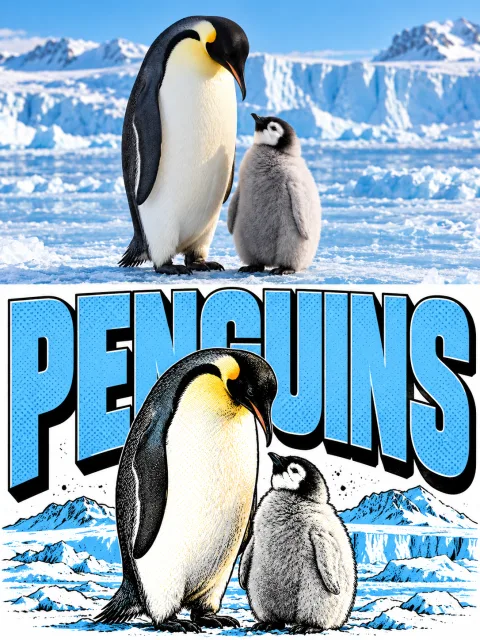
Ad Poster with Photo and Retro Manga Stacked Top and Bottom
Prompt
Convert each uploaded photo into an independent, high-end Japanese retro manga editorial advertisement poster. Use a consistent style that combines bold pop-art ink illustration, gigantic faux-3D English type, and carefully chosen vintage printing textures. No reference images required. Each photo must produce a standalone design with its own subject, headline, color, and composition; under no circumstances combine photos together. Format: strict 3:4 portrait canvas, horizontally divided into exactly two equal 50% sections joined directly at the middle. Do not combine photos together. The format must not include side-by-side layouts, thirds, margins, dividing lines, arrows, Before/After labels, logos, marks, emojis, hairstyles, clothing, poses, proportions, objects, relationships, real textures, lighting, or original color atmospheres. Apply only subtle editorial tone grading. If needed, carefully crop or naturally extend the surrounding background; if necessary, do not stretch, distort, repaint, replace, or alter the main subject. Bottom half — Subject: analyze the current photo and select its most recognizable subject, contour features, meaningful expression, or narrative relationship. Preserve identifiable subject, contours, white highlight dots, precise white highlight dots, rough black ink outlines, solid black shadow shapes, sharp white highlights, selected rendering, and simple saturated color areas. Preserve identifiable facial structure, hairstyle, clothing, animal markings, object geometry, and original expression. Avoid generic anime, chibi characters, childish cartoons, soft shading, photorealism, and glossy digital rendering.
Color: use pure white as the primary background, deep black for outlines and structural shadows, and extract one main accent color from the original photo. Add a second accent color extracted from the photo only when necessary. Use the main color for headline fills and primary illustration shapes. Preserve necessary natural skin tones and neutral tones. Never introduce irrelevant Memphis colors, oversized geometric fields, or multicolored backgrounds. Giant headline: automatically generate a short, photo-specific English headline of 1–3 words. This is a required primary visual element. Use huge, ultra-compressed Sans-Serf letters, tight tracking, thick black outlines, and a strong flat black offset shadow to create a printed faux-3D effect with no real bevel, gloss, or sheen. Fill the letters with the photo's primary accent color. The headline should occupy about 30–45% of the lower board and extend across most of the width, allowing slight edge cropping. Never reduce it to small type. Composition: arrange three integrated layers: a clean white background, the giant headline in the middle or rear layer, and the subject as a prominent illustration in the front. The subject should occupy about 45–70% of the lower board height and must overlap and partially cover the selected headline letters within the visible area, keeping the text reasonably legible and necessary facial or object features unobstructed. Typeface and illustration must form a unified commercial-ad composition; never separate stacked elements. Textures: add limited halftone patterns, ink speckles, graphic bleed, and subtle printing errors only in selected shadow areas, illustration zones, accent colors, or the type. Preserve most of the white background. Use a minimal number of small supporting icons. Avoid large circles, color bands, rectangular backgrounds, random Memphis patterns, paper textures, full-frame distressing, excessive ornamentation, gradients, or unnecessary objects.
Final check: ensure precise 3:4 ratio, 50/50 panel equality, authentic original photo on top, clean white background on the bottom half, a giant photo-colored English headline, thick black outlines and offsets, a comic ink expression that clearly overlaps the headline, strong contrast, color selection and selective compositing from the photo source, and selective vintage texture. When constraints conflict, prioritize layout precision, photo fidelity, the giant headline, subject-type overlap, recognizable illustration, and clean white space. The result must resemble a professionally art-directed Japanese retro manga magazine advertisement. GIANT TYPE FIRST。HERO ILLUSTRATION SECOND。白色空间始终如此。如果照片已经上传,立即生成完成的艺术作品。将每张上传的照片转换成独立的高级日本复古漫画编辑广告海报。使用一致的风格,结合大胆的流行艺术墨水插画、巨大的伪3D英语字体和精选的复古印刷纹理。无需参考图片。每张照片必须产生一个独立的设计,包含其自己的主题、标题、颜色和构图;绝不能将照片结合在一起。格式:严格的3:4人像画布,水平分成精确地两个等同的50%部分,直接在中间连接。不要将照片结合在一起。格式中不要包含侧边排列、第三部分、边缘、分隔线、箭头、Before/After标签、标志、标志、表情、发型、服装、姿势、比例、物体、关系、真实的纹理、光线和原创的色彩氛围。只应用微妙的编辑色调评分。如有需要,请仔细裁剪或自然扩展周围背景,如果必要的话,请不要伸展、扭曲、重新绘制、替换或改变主主题。底部半部分 — 主题:分析当前的照片,并选择其最可识别的主题、特征的轮廓、有意义的表情或叙事关系。保留可识别的主题、轮廓、白色高光点、精确的白色高光点、粗糙的黑色墨水轮廓、坚实的黑色阴影形状、尖锐的白色高光点、精选的渲染和简单的饱和色区域。保留可识别的面部结构、发型、服装、动物标记、物体几何学和原创的表情。避免使用通用动漫、奇比角色、幼稚的卡通、柔和的阴影、真实主义和光泽的数字呈现。
颜色:使用纯白作为主背景,深黑色用于轮廓和结构阴影,并从原始照片中提取一个主要的注点颜色。只在必要时添加第二张照片中提取的注点颜色。使用主颜色用于标题填充和主要的插画形状。保留必需的自然皮肤色调和中性色调。永远不要引入与无关的孟菲斯颜色、过大几何学领域或多色背景。巨型标题:自动生成一个短、专为照片而定制的英语标题,包含1-3个单词。这是一个必需的主视觉元素。使用巨大的超大压缩的Sans-Serf字母,紧密的间距,厚黑色轮廓和强烈的平板黑色偏移阴影,创建一个印刷的伪3D效果,没有真实的剥离、贝尔或光泽。填充字母使用照片的主要注点颜色。标题应该占用下面画板的约30-45%,并延伸到大多数的宽度上,允许轻微的边缘剪裁。永远不要将其降低到小字。构图:安排三个整合的层:干净的白色背景,中间或后层中的巨大的标题,和主体在前面显著的插画。主题应该占用下面画板的约45-70%的高度,并且必须在可视的范围内覆盖并部分覆盖选定的标题字母,保持文字合理可读和必需的面部或物体特征无阻碍。字体和插画必须形成一个统一的商业广告构图,永远不要将堆叠元素分开。文本:添加受限的半点图案、墨水粒、图形渗透和微妙的印刷错误,只在选定的阴影、插画区域、注点颜色或字体中添加。保留大多数白色背景。使用最少几张小型支持图标。避免使用巨大的圆圈、色彩带、长方形背景、随机的孟菲斯图案、纸张纹理、完整的框架破坏、过度的装饰、渐变色或不必要的物体。
最终检查:确保精确的3:4比例,50/50面板均等,正宗的原创照片在上方,干净的白色底部背景,巨大的照片色彩英文标题,厚实的黑色轮廓和偏色,表达的漫画墨主题在标题上显然重叠,强烈的对比,照片来源的颜色和选择性复合,选择性复合的复古质地。当限制条件竞争时,优先布局的精确性,照片的忠实性,巨大的标题,主题-字体重叠,可识别的插画和干净的白色空间。结果必须类似于一份专业艺术指导的日本复古漫画杂志广告。GIANT TYPE FIRST。HERO ILLUSTRATION SECOND。白色空间始终如此。如果照片已经上传,立即生成完成的艺术作品。
Input images
Summary
Attach any photo you like to create an ad poster that places a photo in the upper half and a manga-style illustration in the lower half. It combines colors picked from the photo with a large English headline to produce a bold design reminiscent of old magazine advertisements. Example outputs follow the same order as the input images.