
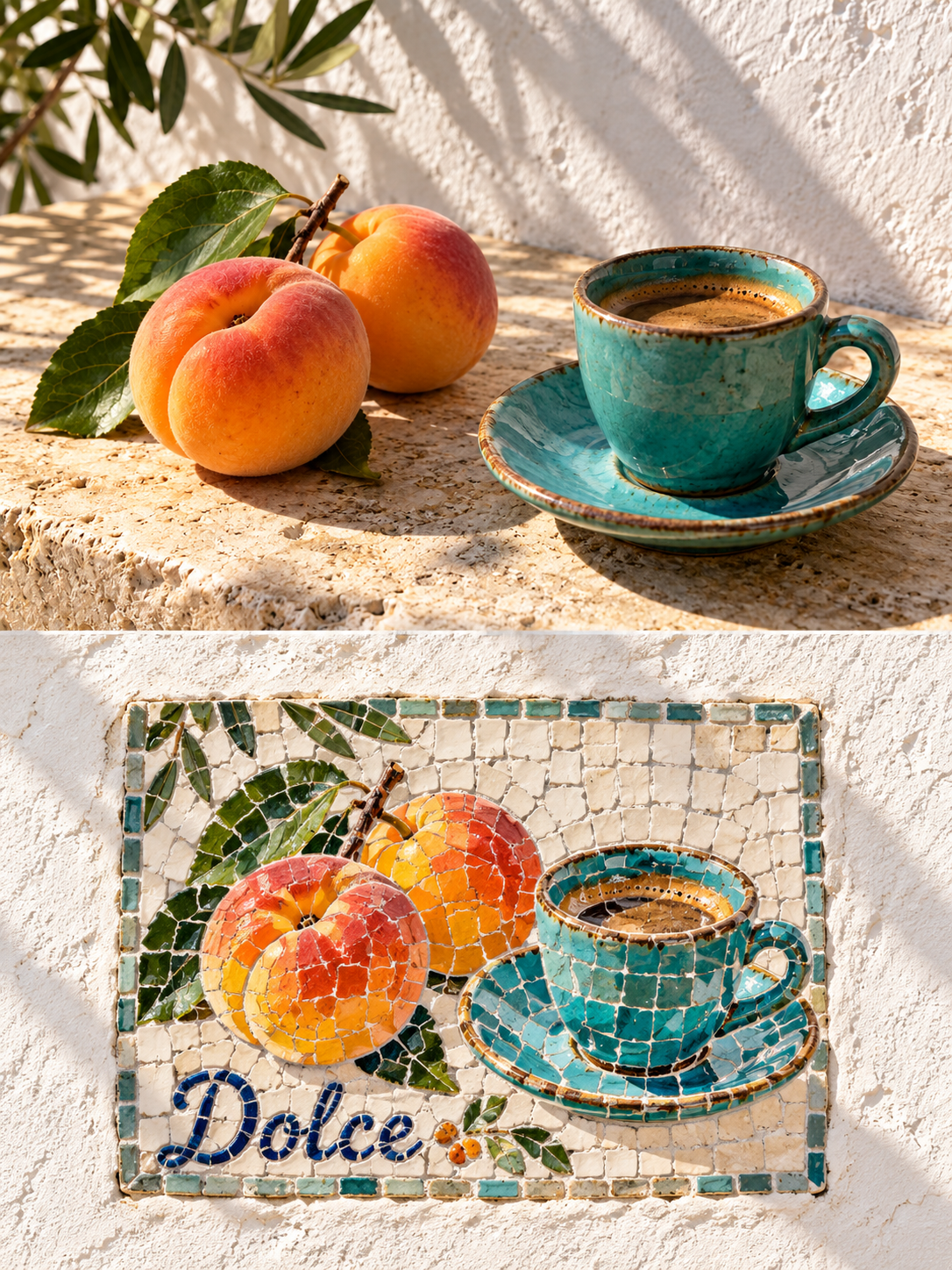
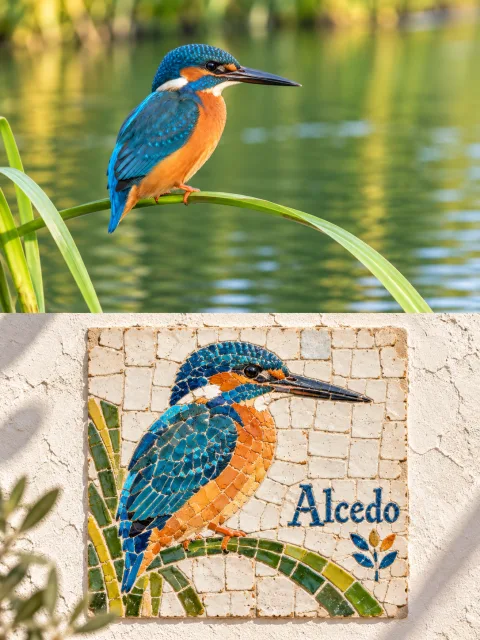
Mediterranean-style poster pairing a photo with a glazed mosaic
Prompt
Please turn each photo I upload into a separate, standalone high-end design poster — no multi-photo collages, output each photo individually. Use an overall 3:4 vertical composition, with the top and bottom areas strictly 1:1 in height, each occupying 50% of the frame.

The top half should retain the original photo, preserving the subject's identity, structure, pose, realistic texture, natural light and shadow, and the original color atmosphere, applying only subtle high-end color grading so it reads like an image from an art magazine or exhibition. You may naturally extend the surrounding background to fit the format, but do not stretch, distort, or alter the subject.

The bottom half should extract the photo's most identifiable **subject, contours, structure and color relationships**, and reconstruct them into a **handmade glazed ceramic mosaic panel / glazed ceramic mosaic**. The subject is composed of square or irregular small tiles of slightly varying sizes; the contour follows the tile arrangement with natural undulation, giving both a pixelated abstraction and the warmth of hand-cut pieces. Details are extremely minimal — rely on color blocks and key contours so the original object is recognizable at a glance.

The mosaic "pixels" are not a perfectly regular grid but show handcrafted variation: tile spacing varies slightly, edges may have cutting chips, and some areas change direction to follow contours. Background areas may use pale tiles or leave the white grout/ground visible so the subject reads like a small emblem inlaid on a wall.

Emphasize the real glazed ceramic material: glaze gloss and tiny bubbles, kiln-fired color variations in depth, the matte grout with fine grit, and slight surface unevenness on tiles causing varied light reflection. Avoid flat digital pixel fills, game-style looks, or plastic 3D render gloss.

Compose around a small-scale square or arch-shaped inlay + large areas of negative space; the inlay should occupy only about 35%–40% of the lower half, and may be off-center or partially cropped as if set into a quiet white lime/plaster wall. Preserve the real plaster texture of the wall and soft lighting.

Extract 4–6 of the most vibrant colors from the top photo and translate them into glaze colors: cobalt blue, turquoise, ochre-orange, lemon yellow, terracotta red, off-white, etc., allowing natural variation from the source — bright, pure, and Mediterranean-clear.

Introduce minimal text if desired, like a Mediterranean street tile nameplate: form a short word or a number in mosaic or hand-painted glaze letters and place it below or beside the inlay; language is unrestricted.

The overall visual should read as a combination of **glazed mosaic, hand-cut tiles, grout grid, Mediterranean sunlight, and abundant negative space**. Core principle: pixels are not a digital-age invention — they have always existed on walls. Avoid digital-pixel styling, full-coverage mosaics, cheap decorative looks, excessive symmetry, cartoonish feel, and templated poster designs.
Input images
Summary
Use with a photograph where the main subject is clearly visible. Place the original photo in the upper half and a handmade ceramic-tile mosaic that carries the colors and shapes in the lower half, finishing as a vertical poster that evokes a white plaster wall and sunlight. Example outputs follow the same order as the input images.