
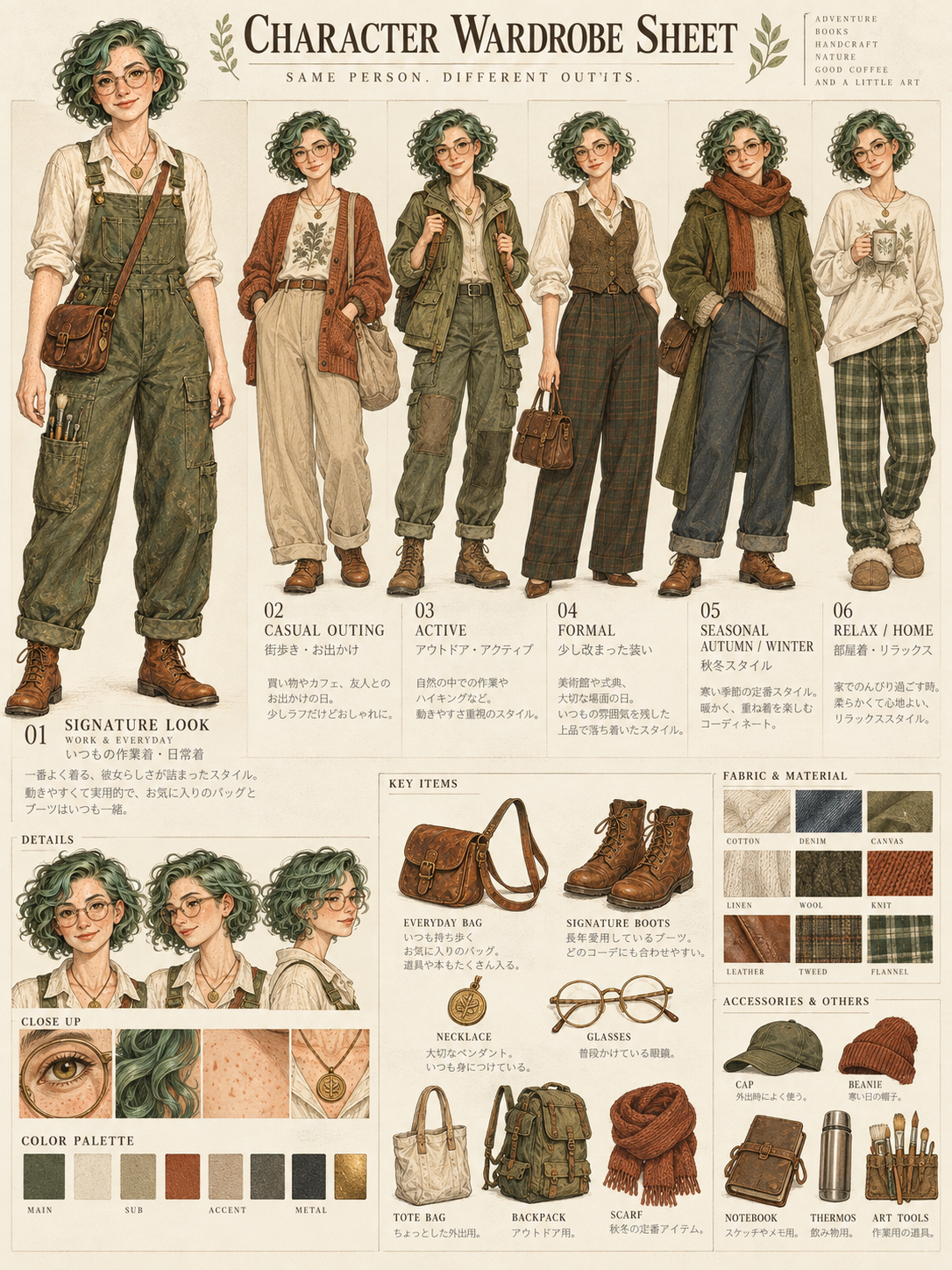
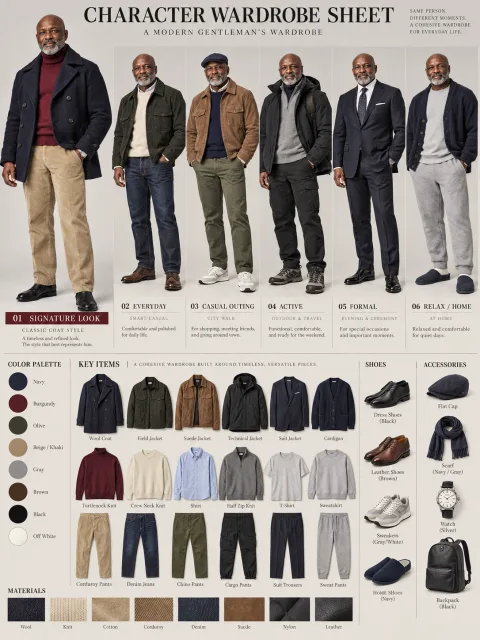
Image-generation prompt to create a cohesive wardrobe sheet for a person or character
Prompt
Referencing the uploaded image, and while keeping the subject’s facial features, hairstyle, hair color, eye color, body type, head-to-body ratio (head count), physical traits, racial/species traits, and the original image’s art style / photographic expression / rendering method as faithfully as possible,

"CHARACTER WARDROBE SHEET"

create a wardrobe reference dedicated to that person or character.

The goal is not simple dress-up,

but to produce a collection that serves as

"Character Design × Outfit Variations × Closet Setup × Fashion Reference"

and that is easy to use in actual illustration production, manga, standing portraits, games, and setting/reference materials.

Do not make unrelated garments for each outfit;

design a unified wardrobe that reads as

"clothes this person would actually own and rotate through depending on the situation."

━━━━━━━━━━━━━━━━━━
【CHARACTER & VISUAL STYLE LOCK】
━━━━━━━━━━━━━━━━━━

Prioritize preserving the person/character in the uploaded image and the original image’s visual expression.

Do not change identifying physical or species traits such as face shape, hairstyle, hair color, eyes, skin, body type, head-to-body ratio, ears, horns, wings, tail, cybernetic parts, etc.

Maintain the input image’s art style / photographic expression / rendering method — anime, manga, heavy paint, watercolor, line art, semi-real, 3DCG, photo/realism, etc.

Do not turn an illustration into a photograph without permission.
Do not turn a photograph into an illustration without permission.

The elements to change should mainly be fashion elements such as:

・Clothing
・Shoes
・Hats
・Bags
・Accessories
・Jewelry
・Seasonal items

━━━━━━━━━━━━━━━━━━
【PROPORTION LOCK / keep head-to-body ratio】
━━━━━━━━━━━━━━━━━━

Strictly maintain the uploaded person/character’s **head count and full-body proportions.**

Even when outfits change, match the original image as closely as possible for:

・Head size
・Ratio of face to head
・Neck length
・Shoulder width
・Ribcage size
・Torso length
・Waist/hip position
・Arm length
・Hand size
・Leg length
・Foot size
・Head-to-body ratio
・Sense of height

Do not change head count or body build per outfit.

If the source image is a stylized/deformed character, **maintain the same deformation rate / head-to-body ratio as the original image.**

When all full-body figures are shown together, the top priority is that **it is clearly the same person simply changing clothes.**

━━━━━━━━━━━━━━━━━━
【WARDROBE CONCEPT】
━━━━━━━━━━━━━━━━━━

From the uploaded person/character, read their:

・Vibe
・Apparent age range
・Worldview / setting
・Lifestyle
・Preferred colors
・Flattering silhouettes
・Suitable materials
・Characteristics of existing clothing

and decide the design language for the entire wardrobe.

You do not need to use exactly the same elements in every outfit, but include enough commonality that it reads as a single person’s closet.

Examples of shared elements:

・Primary color palette
・Accent colors
・Hardware/metal color
・Silhouette tendencies
・Preferred materials
・Collar or sleeve shapes
・Shoe tendencies
・Accessories
・Motifs
・Layering approaches

Avoid making the outfit genres so varied that they no longer read as the same person’s wardrobe.

━━━━━━━━━━━━━━━━━━
【WARDROBE LINEUP】
━━━━━━━━━━━━━━━━━━

Create about **4–6** outfit variations on a single sheet.

Do not inflate the number of outfits; prioritize anatomical accuracy, head-to-body ratio consistency, and correct outfit construction for each full-body figure.

Basic candidates:

01. EVERYDAY
Everyday wear. The most frequently worn, natural-looking clothes.

02. CASUAL OUTING
Outfits for shopping, walking around town, going out with friends, etc.

03. ACTIVE
Easy-to-move-in clothes: sporty, outdoor, light work, etc.

04. FORMAL
Slightly dressy clothes for ceremonies, parties, important occasions.

05. SEASONAL
Season-specific (spring/summer or autumn/winter) garments.

06. RELAX / HOME
Loungewear, home clothes, pajamas, etc.

If needed, you may substitute categories such as:

WORK
ACADEMY
RAINY DAY
TRAVEL
CEREMONY
DATE
FESTIVAL
RESORT
SPECIAL

You do not have to use all categories. Choose categories that are natural for the original character’s world.

━━━━━━━━━━━━━━━━━━
【OUTFIT VARIATION】
━━━━━━━━━━━━━━━━━━

Each outfit should be clearly different in design to match its purpose, not just the same clothes in different colors.

Elements to vary:

・Tops
・Bottoms
・Dresses / one-pieces
・Outerwear
・Legwear
・Shoes
・Hats
・Bags
・Accessories
・Layering
・Seasonal materials

It’s fine for the wardrobe to share items across outfits.

Examples:

Using the same boots in multiple coordinates
Reusing a favorite jacket
Repeating the same accessory
Pairing the same bag with different outfits

Including such “mix-and-match” choices makes it feel like a real closet.

━━━━━━━━━━━━━━━━━━
【DESIGN CONSISTENCY】
━━━━━━━━━━━━━━━━━━

Give each outfit a common design language. For example:

・Black + white + accent color
・Silver hardware
・Slim silhouettes
・Combination of soft fabrics and rigid materials
・Same accessory repeated
・Shared patterns or motifs

━━━━━━━━━━━━━━━━━━
【FULL BODY VIEW】
━━━━━━━━━━━━━━━━━━

Each coordinate should be shown as a full-body view from head to shoes.

Display each full-body figure at a size that is not too small so head count, limbs, and outfit construction are clearly readable.

Where possible, present each outfit at the **same display scale** so outfits do not make the character appear taller or shorter.

Pose the character in a neutral, natural standing pose that makes the outfit easy to inspect.

Slight pose variations per outfit are acceptable, but avoid poses that change the apparent head count or leg length.

Prioritize reference clarity by avoiding:

・Arms that largely hide the torso
・Extremely crossed legs
・Crouching
・Jumping
・Running
・Severe torso twists
・Strong low- or high-angle shots
・Extreme perspective

Examples of stable poses:

・Both arms naturally down
・One hand lightly placed on the hip
・Stand with feet slightly apart
・A very natural shift of weight

Make silhouettes, hems, shoes, and layering readable for each outfit.

━━━━━━━━━━━━━━━━━━
【WARDROBE HERO LOOK】
━━━━━━━━━━━━━━━━━━

From the 4–6 outfits, select the single most character-appropriate outfit and display it slightly larger as the

"SIGNATURE LOOK"

The SIGNATURE LOOK should best balance:

・Character identity
・Worldview
・Fashionability
・Daily usability

━━━━━━━━━━━━━━━━━━
【GARMENT & ACCESSORY DETAILS】
━━━━━━━━━━━━━━━━━━

If space allows, display representative individual items that make up the wardrobe in the margins.

Examples:

FAVORITE OUTER
EVERYDAY BAG
SIGNATURE SHOES
ACCESSORIES
HEADWEAR
SEASONAL ITEM

However, single-item displays should not take precedence over anatomical accuracy of the figures.

If space is limited, reduce the number of single-item displays. Prioritize the completion and legibility of each full-body figure.

━━━━━━━━━━━━━━━━━━
【COLOR & MATERIAL LANGUAGE】
━━━━━━━━━━━━━━━━━━

Organize the main colors used across the wardrobe into about 5–8 colors.

Make it clear the relationships between:

MAIN COLOR
SUB COLOR
ACCENT COLOR
METAL / HARDWARE

Use appropriate materials from options such as:

COTTON
KNIT
DENIM
LEATHER
NYLON
WOOL
LACE
SHEER
METALLIC
SYNTHETIC

Treat color swatches and material samples as supplementary information and place them so they do not interfere with the readability of the full-body figures.

━━━━━━━━━━━━━━━━━━
【OPTIONAL FUNNY SLOT】
━━━━━━━━━━━━━━━━━━

Optionally, at very low frequency, you may include one slightly surprising outfit.

Examples:

School tracksuit
Fluffy pajamas
Tourist T-shirt
Mascot costume
Raincoat
Loud Christmas sweater
Extreme cold-weather gear
Unusually utilitarian workwear

Do not make the whole wardrobe a gag.

Keep the surprise within the realm of "this person might actually own something like this," giving a friendly, believable eccentricity.

━━━━━━━━━━━━━━━━━━
【OUTFIT LABELS】
━━━━━━━━━━━━━━━━━━

Label each outfit with a short category name or outfit name.

Examples:

EVERYDAY
CITY WALK

FORMAL
MIDNIGHT CEREMONY

WINTER
SILVER LAYER

RELAX
SUNDAY ROOM

SPECIAL
SIGNATURE NIGHT

Use tidy typography and place labels where they do not obstruct the outfit.

Avoid meaningless pseudo-letters or large blocks of text.

━━━━━━━━━━━━━━━━━━
【ANATOMY SAFETY】
━━━━━━━━━━━━━━━━━━

Prioritize natural human anatomy, correct part counts, head-to-body ratio, and body proportions.

Each full-body figure must have:

・1 head
・1 torso
・2 arms
・2 hands
・2 legs
・2 feet

Do not create extra arms, extra legs, extra hands/feet, duplicated limbs, or fused limbs.

Hands should be naturally shaped left and right, and fingers should not be extremely distorted.

Each outfit should read clearly as an independent single figure. Ensure limbs, hands, and outfits do not visually merge with adjacent figures.

Also ensure consistency across all full-body figures for:

・Head count / head-to-body ratio
・Sense of height
・Head size
・Shoulder width
・Torso length
・Arm length
・Leg length
・Hand/foot size

If the amount of information becomes excessive, reduce the number of outfits, accessory items, details, or material samples if necessary to prioritize anatomical accuracy.

Priority order:

1. Match the subject本人
2. Maintain the original image’s head count, body type, and body proportions
3. Correct number of arms/legs/hands/feet and anatomical accuracy
4. Completion quality of each full-body figure
5. Ease of comparing outfit differences
6. Individual item, material, and supplementary information

━━━━━━━━━━━━━━━━━━
【BACKGROUND & LIGHTING】
━━━━━━━━━━━━━━━━━━

Use a simple background that makes the wardrobe reference easy to read.

Prefer off-white, ivory, light gray, pale beige, or neutral gray.

Do not depict large-scale cityscapes, castles, forests, futuristic cities, or interior scenes.

Convey the worldbuilding mainly through outfit design.

Use neutral, consistent lighting so colors and materials across all outfits are easy to compare.

Avoid extreme backlighting, colored lighting, deep shadows, bloom, or lens flare.

━━━━━━━━━━━━━━━━━━
【LAYOUT】
━━━━━━━━━━━━━━━━━━

This should not be a "fashion advertisement" but rather a

"character wardrobe reference sheet"
"outfit variation sheet"
"closet design reference"

Recommended structure:

Center:
Larger SIGNATURE LOOK

Around it:
4–6 WARDROBE LOOKS

Margins:
Representative items
Accessories
Materials
Color palette

Do not overlap full-body figures; ensure ample margins.

Where possible, align the bottoms (feet) and head heights of the full-body figures so height and head count comparisons are easy.

When viewing the sheet, the top priorities are that the viewer can understand:

・What kind of clothes this person usually wears
・What colors they prefer
・What silhouettes suit them
・How they change by season
・How they change between formal and casual
・What common elements preserve their identity

━━━━━━━━━━━━━━━━━━
【AVOID】
━━━━━━━━━━━━━━━━━━

Be careful to avoid:

Altered identity
Face alteration
Hairstyle/hair color changes
Head-count changes
Head size changes
Height perception changes
Arm or leg length changes
Body-type changes per outfit
Regression to child or aging to adult
Excessive model-like body shaping
Removal of physical or species traits
Art style change
Extra arms or legs
Fused limbs
Severely malformed fingers
A wardrobe made up entirely of different genres losing cohesion
Making every outfit merely color variants of the same garment
Excessive exposure
Unnatural transparency
A surplus of belts or pouches
Meaningless over-decoration
Intense action poses
Extreme perspective
Poses that hide outfits
Garish backgrounds
Large amounts of meaningless text
Unnecessary logos.

━━━━━━━━━━━━━━━━━━
【FINAL GOAL】
━━━━━━━━━━━━━━━━━━

The priority is not to

"place a lot of random clothes side by side,"

but to

"create a reference that looks like the same person/character actually changing clothes from their closet."

Fix the person/character themself, their face, hairstyle, physical traits, the original image’s art/photographic style, and their **head-to-body ratio, body type, and body proportions.**

On that basis, design multiple outfits such as:

Everyday wear
Going-out wear
Seasonal wear
Formal wear
Relaxed / home wear
Special outfits

While outfits may differ, ensure that **head count, height, build, and limb lengths remain consistent as the same person.**

Do not change the person’s body for different outfits. Design clothes to fit the person’s body.

If necessary, reduce supporting information or the number of outfits to prioritize:

・Character identity
・Head-to-body ratio maintenance
・Anatomical accuracy
・Outfit legibility
・Wardrobe cohesion

Portrait orientation ~3:4 to 4:5 recommended.
Do not cut off full bodies.
Simple background.
Neutral lighting.
About 4–6 outfits.
Display one SIGNATURE LOOK larger.
Prioritize ease of outfit comparison, cohesion, character identity, and stability of anatomy and head-to-body ratio.
Input images
Summary
You will upload images that show the full body and face/hair of a person or character. While preserving the same sense of identity and the original art/photographic style as much as possible, produce a reference sheet that summarizes 4–6 types of outfits — everyday wear, going-out wear, formal, seasonal, etc. — so colors, materials, and accessories can be compared. This becomes a practical reference for designing outfits.